
Churchlands Primary School – A School Shaped by the Growth of Churchlands
For generations of local families, Churchlands Primary School has been a central part of life in Churchlands and Floreat.
Known for its strong community spirit, academic reputation, and connection to the former Churchlands Teachers College and Edith Cowan University Churchlands Campus, the school has played an important role in the educational history of Perth’s western suburbs for more than half a century.

However, many residents may not realise that Churchlands Primary School originally began within the buildings of the former Churchlands Teachers College itself — well before the school moved to its current location.
Its history is closely tied to the rapid suburban growth of Perth during the post-war decades, the development of teacher education in Western Australia, and the transformation of the wider Churchlands area over time.
This article explores the history of Churchlands Primary School, from its beginnings in 1965 through to the modern school community that exists today. The Early Years – Churchlands Teachers College (1965–1972)
Churchlands Primary School officially commenced in 1965 during a period of significant suburban expansion across Perth’s western suburbs.
At the time, Churchlands and neighbouring areas such as Floreat and Wembley Downs were rapidly growing as new families moved into the area following the post-war housing boom.

Increasing student numbers created demand for additional schools and educational infrastructure throughout the region.
Rather than initially operating from its current site, Churchlands Primary School began within the buildings of the Churchlands Teachers College — the institution established to train future teachers in Western Australia.
Historical aerial imagery supports this timeline. Aerial photographs from the mid-1960s show the Teachers College buildings already established within the area, while the current Churchlands Primary School site had not yet been developed as a standalone school campus.
The arrangement was intentional. Churchlands Primary School was designed to operate as a “model” or demonstration school, allowing trainee teachers to observe experienced educators in real classroom settings as part of their training.
This created a close relationship between the school and the Teachers College, with many Churchlands Primary teachers becoming known for their excellence in teaching practice, classroom management, and curriculum delivery.
The school remained within the Teachers College environment until 1972, when Churchlands Primary School relocated to its current site and began operating as a standalone primary school campus serving the rapidly expanding local community.

A Demonstration School for Future Teachers
During its early decades, Churchlands Primary School operated very differently from a typical suburban primary school.
Because of its close connection to the Churchlands Teachers College, the school functioned as a “demonstration school” — a place where trainee teachers could observe experienced educators delivering lessons in real classroom settings.
At the time, this model was considered an important part of teacher training in Western Australia. Academic staff and trainee teachers from the Teachers College regularly attended classrooms at Churchlands Primary School to observe teaching methods, classroom management, and curriculum delivery.
Teachers at the school became well known for their strong teaching practice and professional standards. In many cases, staff were expected to present demonstration lessons for trainee teachers and academic observers, creating a strong culture of educational excellence within the school.

During the late 1980s, the training approach gradually evolved. Rather than primarily observing demonstration lessons, trainee teachers increasingly participated in smaller group teaching activities under the supervision of experienced classroom teachers and college tutors.
Over time, broader changes within tertiary education also reshaped the relationship between the school and the college campus. The Churchlands Teachers College eventually became part of the Western Australian College of Advanced Education (WACAE) in 1981 before later transitioning into Edith Cowan University (ECU) in 1991.

As ECU expanded and shifted major teaching programs to Mount Lawley and Joondalup, the role of the Churchlands campus gradually diminished. In the early 2000s, the decision was made to close the ECU Churchlands campus, with demolition of the site commencing in 2009.
Today, the former ECU campus site has been redeveloped into the Churchlands Green residential estate — a significant transformation from the educational precinct that once operated alongside Churchlands Primary School for several decades.
The Police Horse Stables Era
Another lesser-known chapter of the area’s history involves the former WA Police Horse Stables, which operated on land just north of Churchlands Primary School between 1953 and 1976.
During World War II (1939–1945), additional Police Horse Yards were also constructed on Cromarty Road, directly adjacent to the present-day Churchlands Primary School site. These yards were reportedly established as an emergency backup facility in case the main Roe Street police stables in Perth were damaged during wartime.

By the time Churchlands Primary School relocated to its current site in 1972, the temporary horse yards on Cromarty Road were decommissioned and cleared for school development. However, the main mounted police stables to the north continued operating for several more years.
In 1976, the planned widening of Pearson Street made it impractical for the Police Horse Stables to remain at the main site. The facilities were subsequently relocated — initially to Belmont Racecourse before eventually moving to the Maylands Police Stables later that same year.

This lesser-known part of the suburb’s history highlights just how dramatically the Churchlands area has changed over time — evolving from semi-rural utility land and educational precincts into the established residential community that exists today.
Growing with the Churchlands Community
Following its move to the current site in 1972, Churchlands Primary School continued to grow alongside the surrounding Churchlands and Floreat communities.
Throughout the 1970s, 1980s, and 1990s, Perth’s western suburbs experienced significant residential growth, with increasing numbers of families settling in the area. As a result, Churchlands Primary School gradually developed into an important local institution for generations of students and families.
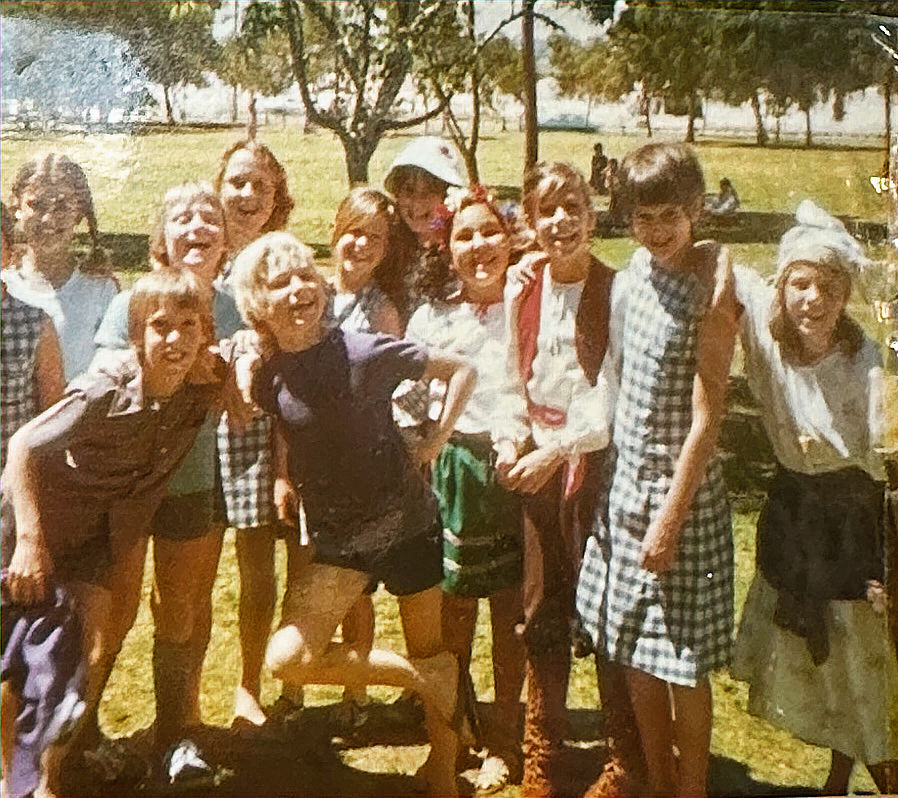
Over the decades, the school expanded both physically and academically. New classrooms, specialist teaching spaces, sporting facilities, and play areas were progressively added to support growing enrolments and evolving educational needs.
The school also developed a strong reputation for academic achievement, student wellbeing, and parent involvement. Parents played an active role through the P&C Association, school events, fundraising activities, and broader participation within school life.
Many local families developed long-standing connections with the school, with multiple generations of students attending Churchlands Primary School across different decades.
The school’s leafy grounds and surrounding environment also became an important part of its identity, reflecting the character of the wider Churchlands and Floreat area.


Connection to Churchlands Green and Edith Cowan University
The connection between Churchlands Primary School and Churchlands Green extends well beyond simple geography.
The Churchlands Green estate was developed on the former site of Edith Cowan University’s Churchlands Campus — land that originally formed part of the same educational precinct connected to the Churchlands Teachers College where Churchlands Primary School itself began.

In many ways, the area has come full circle. Land once used to train future teachers in Western Australia is now home to hundreds of families whose children attend the very school that originally grew from that same educational environment.
Following the closure of the ECU Churchlands campus in the 2000s, the area underwent significant redevelopment as Churchlands Green emerged as one of Perth’s most distinctive residential estates.

The growth of Churchlands Green also contributed to a new generation of families becoming part of the Churchlands Primary School community, helping maintain strong enrolment numbers and reinforcing the school’s close connection to the local area.
Today, many students living in Churchlands Green walk daily through an area layered with educational history stretching back more than half a century.

School Catchment and Local Community
Today, Churchlands Primary School services a large intake area across parts of Churchlands, Floreat, and surrounding western suburbs.
The catchment includes a mix of long-established residential streets alongside newer developments such as Churchlands Green, helping maintain strong enrolment demand and a diverse local school community.

The school’s location near Herdsman Lake, Churchlands Senior High School, and the former ECU Churchlands campus further reinforces its long-standing connection to the broader Churchlands area. Churchlands Primary School Today
Today, Churchlands Primary School is a well-established Independent Public School catering for more than 470 students from Kindergarten to Year 6.
Located in the leafy western suburb of Floreat, just a short distance from Churchlands Senior High School and the former ECU Churchlands campus, the school continues to maintain a strong reputation for academic achievement, community involvement, and inclusive education.

The school provides a broad and innovative curriculum aligned with the Western Australian Curriculum, with a strong focus on literacy, numeracy, critical thinking, creativity, and student wellbeing.
Specialist programs in music, visual arts, drama, physical education, French, and digital learning contribute to a well-rounded learning environment for students.
Churchlands Primary School has also developed a strong reputation for supporting students from diverse cultural and linguistic backgrounds. A significant number of students speak English as an Additional Language or Dialect (EAL/D), supported by specialist teaching programs designed to help students fully engage in school life and learning.
One of the school’s distinctive modern features is its integrated environmental and sustainability focus. Programs centred around the school’s “Ecoshed” encourage students to engage with recycling, composting, vegetable gardens, bush tucker plants, worm farms, and environmental stewardship through hands-on learning experiences.

The school’s strong sense of community also remains a defining characteristic. Parents continue to play an active role through the P&C Association, School Board, volunteering, fundraising, and participation in school activities throughout the year.
A Lasting Part of the Churchlands Community
For more than half a century, Churchlands Primary School has remained an important part of the local landscape.
From its beginnings within the Churchlands Teachers College in 1965 through to the modern independent public school that exists today, the school’s history closely reflects the broader growth and evolution of Churchlands itself.

Generations of local families have passed through its classrooms, playgrounds, and school community, helping shape the strong sense of identity and belonging that continues today.
As Churchlands and the surrounding western suburbs continue to evolve, Churchlands Primary School remains one of the area’s most enduring and recognisable community institutions.


Comments