
Herdsman Lake: A Complete Guide to Perth's Historic Urban Wetland
Updated: Jul 15
Herdsman Lake is one of Perth’s most important urban wetlands and one of the defining natural landmarks of Churchlands.
Virtually the entire eastern boundary of Churchlands runs alongside this vast wetland system, creating a close relationship between the suburb and the lake that has existed for thousands of years.

Long before modern homes, schools and roads were built, Herdsman Lake provided food, water and shelter for Aboriginal people. Later, it influenced European settlement, farming, drainage schemes, subdivision and the gradual development of the surrounding suburbs.
Quick Facts
Location: Churchlands, Wembley, Woodlands, Glendalough & Osborne Park
Distance from Perth CBD: Approximately 7 km
Area: Approximately 300 hectares
Walking Trail: Approximately 7 km loop
Bird Species Recorded: More than 100
Regional Park Since: 1997
Best For: Walking, birdwatching, cycling, photography and picnics
Today, Herdsman Lake Regional Park is a tranquil place for walking, cycling, birdwatching, photography and picnicking. Yet its peaceful appearance hides a remarkable history.
The lake has been considered for grazing, horticulture, rubbish disposal, mining, drainage, subdivision and even an airport. It has been substantially altered by human activity, but it has also survived repeated attempts to reshape or develop it.
More than 100 bird species have been recorded at Herdsman Lake, including migratory birds that travel enormous distances between Australia and the Northern Hemisphere. The wetland also supports frogs, reptiles, native vegetation and other wildlife that have become increasingly rare across the Swan Coastal Plain.
For Churchlands residents, Herdsman Lake is far more than a nearby park. It is a living connection to the area’s natural, cultural and suburban history.
Where Is Herdsman Lake?
Herdsman Lake Regional Park is located approximately seven kilometres north-west of the Perth CBD.

The lake is bordered by several suburbs, including Churchlands, Wembley, Woodlands, Glendalough and Osborne Park. Its western side lies directly alongside Churchlands, making the wetland one of the suburb’s most prominent geographic features.
The wider regional park covers approximately 300 hectares and includes open water, reed beds, paperbark woodlands, walking paths, picnic areas and wildlife observation points.
A shared pathway extends around much of the lake, allowing visitors to complete a circuit of approximately seven kilometres. The relatively flat route is popular with walkers, runners and cyclists, while shorter sections can be explored from several entry points around the park.

Despite being surrounded by roads, homes, schools and commercial areas, Herdsman Lake still feels remarkably secluded in many places. Dense stands of paperbark trees, flooded wetlands and tall rushes help create the feeling of being much further from the city. Herdsman Lake and its Connection to Churchlands Herdsman Lake has played an important role in shaping Churchlands and the wider district.
The wetland formed part of the original landscape long before suburban development began. Its permanent water, abundant wildlife and fertile surrounding land made the area attractive to both Aboriginal people and later European settlers.
As farming and market gardening expanded around the lake, large landholdings developed across what would eventually become Churchlands and neighbouring suburbs. Drainage works, subdivision plans and urban development were all influenced by the position and behaviour of the wetland.

The relationship remains clearly visible today. Churchlands is unusual in having such a large and ecologically significant natural area running along so much of its boundary. Residents can walk from quiet suburban streets into one of Perth’s most important wetland environments within minutes.
Herdsman Lake also helps explain the character of Churchlands. The suburb’s open spaces, mature trees, birdlife and sense of separation from denser urban areas are closely connected to the survival of the lake and the surrounding parkland.

In many respects, it is difficult to fully understand the history and development of Churchlands without first understanding Herdsman Lake.
Ngurgenboro – The Original Herdsman Lake
Long before Perth was established, Herdsman Lake was an important part of the traditional lands of the Whadjuk Noongar people.
Known as Ngurgenboro, the lake and its surrounding wetlands provided a rich source of food and fresh water for at least 5,000 years before European settlement. The area was far more than simply a place to gather food – it was also an important meeting place where people came together to share knowledge, culture and resources.

The wetlands supported an abundance of wildlife. Frogs, tortoises, crustaceans and waterbirds provided valuable sources of protein, while the stems and roots of native wetland plants supplied an important source of carbohydrates. The surrounding bushland also supported a diverse range of plants and animals that sustained Noongar communities throughout the seasons.
Archaeological evidence highlights the long history of Aboriginal occupation around Herdsman Lake. Stone artefacts have been discovered on higher ground north of the lake, while historical records also refer to an Aboriginal burial site within a short distance of the wetland. These findings reinforce the significance of Herdsman Lake as an important cultural landscape long before European settlement.
Even today, it is easy to understand why Ngurgenboro was such a valued place. Despite being surrounded by modern suburbs, the lake remains one of Perth's most peaceful natural environments, supporting an extraordinary diversity of wildlife within just a few kilometres of the city centre.
European Settlement And The Birth Of "Herdsman's Lake"
Following the establishment of the Swan River Colony in 1829, the permanent freshwater of Herdsman Lake quickly attracted European settlers. Early colonists initially referred to the wetland simply as Great Lake, recognising it as one of the largest freshwater lakes on the Swan Coastal Plain.
In 1837, Surveyor-General John Septimus Roe formally surveyed the area and recorded the name Herdsman's Lake, a name that would eventually become the modern Herdsman Lake.

Throughout the nineteenth century, the fertile land surrounding the wetland was gradually cleared for grazing, market gardens and small-scale farming. Reliable access to fresh water made the area well suited to agriculture, and the lake became an important resource for early settlers.
By the turn of the twentieth century, much of the land surrounding Herdsman Lake - including what is now Churchlands - had come under the ownership of the Roman Catholic Church. Large areas were leased for farming and grazing, helping to establish the rural character that defined the district for many decades.

Although today's suburbs bear little resemblance to those early farming landscapes, Herdsman Lake remained at the centre of daily life. It provided water for livestock, supported market gardens that supplied fresh produce to Perth, and shaped the pattern of roads, farms and settlements that would eventually evolve into suburbs such as Churchlands, Woodlands, and Wembley.
As Perth's population continued to grow during the early twentieth century, increasing pressure was placed on the wetland. What had once been viewed as a valuable natural resource was increasingly seen as land that could be drained, developed and repurposed - a philosophy that would dramatically reshape Herdsman Lake over the decades that followed. Draining The Lake - A Bold Vision That Failed
By the early twentieth century, attitudes towards wetlands were very different from those of today. Rather than being valued for their environmental importance, wetlands were often viewed as obstacles to progress - land that could be drained and converted into farmland or urban development.
Herdsman Lake was no exception.
In 1920, the Western Australian Government acquired approximately 1,073 acres (433 hectares) of Herdsman Lake from the Roman Catholic Church as part of a Soldier Settlement Scheme for returned servicemen. The vision was ambitious: drain much of the lake, create productive agricultural land, and establish new residential communities around its fringes.
Work began in 1921 on one of the largest engineering projects ever undertaken in the area. A 3.5-kilometre tunnel was constructed to lower the lake by approximately two metres, carrying water from Herdsman Lake to the Indian Ocean near what is now Floreat Beach.
As the water receded, extensive areas of the former lake bed were exposed. Surveyors laid out roads and residential lots, and in 1928 the reclaimed land was subdivided into 38 agricultural lots, each paired with a residential block on higher ground. The intention was that returned soldiers would live on the residential lot while farming the adjoining land.

Unfortunately, nature had other ideas. Although the drainage scheme successfully lowered water levels, the reclaimed land proved unsuitable for widespread farming and development. During winter, large sections of the former lake bed continued to flood, while poor soils made agriculture far more difficult than expected. Of the original subdivision, only six lots were sold, and three of those were forfeited within five years.
Rather than abandoning the project, the government launched a second subdivision scheme in 1930. This time, 40 cottages were constructed around the perimeter of the lake before the land was reopened for selection. The revised layout incorporated more elevated land suitable for housing in the hope that settlers would have greater success.

Despite these changes, the second scheme also struggled. Seasonal flooding, poor soils and the difficult economic conditions of the Great Depression meant many settlers were unable to establish viable farms. Over time, much of the reclaimed land reverted to grazing, market gardening and other temporary uses.
Historic aerial photographs from the 1930s provide a remarkable glimpse into this period. They show Herdsman Lake almost completely drained, with roads, cottages and subdivision boundaries clearly visible across what had once been open water. Looking at these images today, it is difficult to imagine that much of the modern wetland had temporarily disappeared beneath such an ambitious development scheme.
One lasting reminder of this chapter still survives. Settlers Cottage on Pearson Street in Churchlands is the last remaining example of the 40 cottages built during the second subdivision scheme and stands as an important reminder of this unique period in the area's history.

Ironically, the failure of both subdivision schemes helped preserve much of the landscape that visitors enjoy today. Had either project succeeded, large sections of what is now Herdsman Lake Regional Park - and parts of modern Churchlands - may have been transformed into farmland or suburban development instead of one of Perth's most important urban wetlands.
A Lake Under Constant Threat
The unsuccessful drainage scheme was only the beginning.
Throughout the twentieth century, Herdsman Lake was the subject of numerous proposals that, if implemented, would have dramatically altered or even destroyed the wetland.
Among the more surprising ideas was a proposal in 1936 to construct an airport on the site. The vast, open expanse of the partially drained lake was considered by some to be an ideal location for Perth's future aviation needs.
In later decades, other proposals included using parts of the lake for rubbish disposal, peat mining, expanded horticulture and further drainage works. Each reflected the prevailing belief that wetlands were undeveloped land waiting to be put to more "productive" use.

Fortunately, growing public appreciation of the lake's environmental importance led to increasing opposition to many of these proposals. Community advocacy, together with a greater understanding of wetland ecology, gradually shifted attitudes away from development and towards conservation. By the 1970s, Herdsman Lake was increasingly recognised as one of the last remaining large freshwater wetlands on the Swan Coastal Plain. Rather than asking how the lake could be developed, planners began asking how it could be protected.
This change in thinking would ultimately shape the Herdsman Lake we know today.

The Herdsman Lake Concept Plan
By the 1970s, attitudes towards wetlands had changed dramatically. Rather than seeing Herdsman Lake as land waiting to be developed, planners increasingly recognised its environmental significance and the need to preserve what remained of this unique ecosystem.
In 1976, the Metropolitan Region Planning Authority prepared the Herdsman Lake Concept Plan, a landmark document that would shape the future of the lake for decades to come.
The plan attempted to strike a balance between urban development and environmental conservation.
While it allowed residential development on the north-western and south-western edges of the lake - resulting in the Floreat Lakes and Floreat Waters estates - it also recognised that the central wetland should be protected as a sanctuary for wildlife.
One of the most significant engineering features of the Concept Plan was the creation of a series of deep water bodies around the edge of the wetland. These permanent lakes were designed to retain water throughout the year, improve habitat diversity and help manage water levels within the broader wetland.
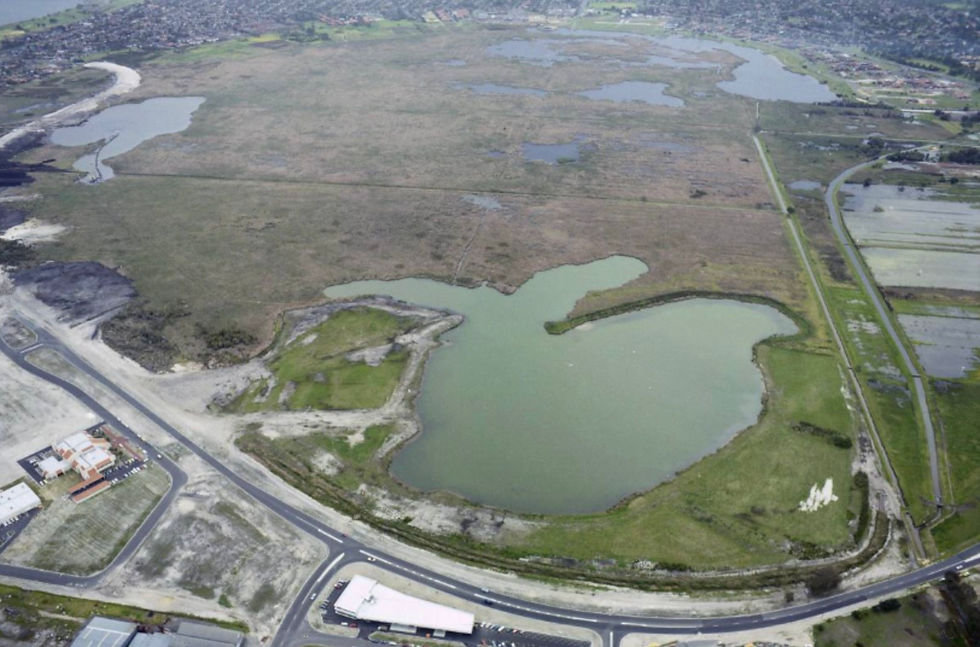
This work resulted in the creation of four permanent lakes that remain familiar landmarks today:
Floreat Waters
Floreat Lakes
Popeye Lake
Powis Lake
The plan also proposed excavating a deep channel, or "moat", around much of the lake's perimeter. This created a greater variety of wetland habitats, with shallow marshes, deeper open water and gently sloping shorelines supporting different plant and animal communities.
The surrounding suburbs were also shaped by this vision. Residential development proceeded around the fringes of the lake, while industrial land expanded within Osborne Park to the north-east. Importantly, however, the extensive central wetland was retained as public open space rather than being developed.
Looking back today, the 1976 Herdsman Lake Concept Plan proved to be a turning point in the lake's history. It acknowledged that urban growth and environmental conservation did not have to be mutually exclusive and established a long-term vision for the protection and enhancement of the wetland.
That vision continued to evolve over the following decades through a series of planning initiatives, restoration projects and management strategies. One significant milestone was the Herdsman Lake Regional Park Management Plan (2004–2013), which brought together conservation, recreation, heritage, education and visitor management into a comprehensive framework for the park's ongoing stewardship.

In many respects, the modern Herdsman Lake we enjoy today is the result of almost three decades of planning, restoration and community commitment that began with the landmark Concept Plan of 1976. It remains one of Perth's finest examples of how thoughtful long-term planning can successfully balance environmental conservation with recreation and urban growth.

From Conservation To Regional Park
Momentum for protecting Herdsman Lake continued to grow during the following decades.
In 1984, the Herdsman Lake Wildlife Centre was officially opened to promote environmental education and encourage the community to appreciate the lake's unique wildlife and ecosystems.
Today, the facility operates as the Herdsman Lake Discovery Centre, managed by the WA Gould League, and continues to welcome school groups, families and nature enthusiasts throughout the year.

Perhaps the most significant milestone came in 1997, when Herdsman Lake was officially declared a Regional Park. Management of the park was transferred to the Department of Conservation and Land Management (now the Department of Biodiversity, Conservation and Attractions), in partnership with the City of Stirling.
This formal protection recognised Herdsman Lake as one of Perth's most significant urban wetlands and ensured that conservation, recreation and environmental education would become the park's primary focus.
The transformation is remarkable.
Within living memory, Herdsman Lake had been viewed as land suitable for drainage, farming, rubbish disposal and industrial expansion. Today, it is recognised as one of the finest examples of successful urban wetland conservation in Australia.

Herdsman Lake Today
Modern visitors experience a landscape that combines natural beauty with carefully managed public access.
A shared walking and cycling path of approximately seven kilometres circles much of the lake, passing through paperbark woodlands, reed beds, open water and picturesque picnic areas. The Olive Seymour Boardwalk provides one of the best opportunities to experience the wetlands up close, allowing visitors to walk among flooded paperbarks while observing birds and other wildlife in their natural habitat.

Although the lake sits only minutes from the Perth CBD, it often feels surprisingly remote. Dense vegetation screens nearby roads, bird calls replace traffic noise, and seasonal changes continually reshape the appearance of the wetlands.
It is difficult to imagine that this peaceful landscape was once almost completely drained and repeatedly threatened by development. Thanks to decades of conservation efforts and changing community attitudes, Herdsman Lake has become one of Perth's greatest environmental success stories - a place where nature and city life exist side by side.

A Haven for Wildlife
One of Herdsman Lake's greatest strengths is its incredible biodiversity. Despite being surrounded by busy roads, residential suburbs and commercial areas, the lake supports one of the richest concentrations of wildlife anywhere within metropolitan Perth.
The Regional Park encompasses approximately 300 hectares of open water, seasonal wetlands, reed beds, paperbark woodlands and flooded gum forests. This variety of habitats provides food, shelter and breeding sites for an extraordinary range of native animals.
Perhaps most impressive is the birdlife.
More than 100 bird species have been recorded at Herdsman Lake, making it one of Western Australia's premier birdwatching destinations. Some species are permanent residents, while others migrate thousands of kilometres each year between Australia and countries across Asia and the Northern Hemisphere.
On almost any visit, you're likely to encounter familiar waterbirds such as Black Swans, Pacific Black Ducks, Australian Shelducks, Eurasian Coots, Purple Swamphens and Australian White Ibises gliding across the water or feeding among the reeds.

The lake also provides important breeding habitat for around 30 species of birds, highlighting its significance not just as a place where birds visit, but where many successfully raise their young.
For keen birdwatchers, Herdsman Lake offers the chance to observe a number of less common species. Migratory shorebirds such as the Wood Sandpiper, Common Sandpiper and Red-necked Stint regularly visit the wetlands after remarkable journeys from breeding grounds in Siberia and other parts of the Northern Hemisphere. Other notable residents include the Australasian Bittern, a threatened species in Western Australia, and the Peregrine Falcon, one of the world's fastest birds.
The diversity of birdlife changes throughout the seasons, meaning no two visits to Herdsman Lake are ever quite the same.

More Than Just Birds
Although birds attract most of the attention, Herdsman Lake supports a much wider range of native wildlife.
The wetlands provide habitat for frogs, turtles, reptiles, insects and countless aquatic invertebrates that form the foundation of the lake's food web. On warm evenings, the calls of native frogs echo across the wetlands, while dragonflies and other insects thrive among the reeds during the warmer months.
One of the lake's most misunderstood residents is the Western Tiger Snake.
Although highly venomous, tiger snakes are an important part of the wetland ecosystem. They help control introduced rats and mice, which would otherwise place additional pressure on native wildlife. Tiger snakes generally avoid people and are rarely aggressive unless threatened. Visitors who remain on designated paths and keep a respectful distance are unlikely to encounter any problems.

The vegetation is equally important.
Towering paperbark trees line many sections of the lake, creating shady wetlands that feel surprisingly remote despite their urban surroundings. Flooded gum trees, rushes and sedges provide nesting sites, shelter and food for countless bird species, while extensive reed beds help filter water entering the lake and create ideal habitat for waterbirds.
Together, these habitats support one of the last large freshwater wetland ecosystems remaining on the Swan Coastal Plain.
Why Herdsman Lake Is So Important
When European settlers first arrived in the Perth region, wetlands covered vast areas of the Swan Coastal Plain. Over the following two centuries, many were drained, filled or developed as the city expanded.
Today, only a fraction of these wetlands remain.
Herdsman Lake is therefore much more than a pleasant place for a walk - it's one of Perth's most significant surviving natural ecosystems.
The lake acts as a refuge for wildlife that has disappeared from many other parts of metropolitan Perth. It also plays an important role in improving water quality, storing stormwater, reducing urban heat and providing opportunities for people to connect with nature close to home.
Its importance extends well beyond Churchlands.
Herdsman Lake is recognised as one of Western Australia's finest examples of successful urban wetland conservation, demonstrating that thriving natural ecosystems can coexist alongside a modern city.

For local residents, the value of the lake is perhaps best appreciated on a quiet morning. As the sun rises over the reeds, Black Swans glide across the water, frogs call from hidden wetlands and birdsong echoes through the paperbark trees. It is a reminder that, despite the surrounding suburbs, Herdsman Lake remains one of Perth's last truly wild places. Things to do at Herdsman Lake Whether you're looking for a peaceful morning walk, somewhere to photograph wildlife, or simply a place to unwind in nature, Herdsman Lake offers something for visitors of all ages.
Unlike many metropolitan parks, Herdsman Lake provides an opportunity to experience a remarkably diverse wetland ecosystem without leaving the city. The combination of walking trails, birdlife, picnic areas and educational facilities makes it one of Perth's most rewarding outdoor destinations.
Walk Around Herdsman Lake
One of the most popular activities at Herdsman Lake is completing the shared walking and cycling path that loops around much of the wetland.
The full circuit covers approximately 7 kilometres and is mostly flat, making it suitable for walkers, runners, cyclists and families with prams. If you don't feel like completing the entire circuit, there are numerous entry points around the lake where shorter walks can easily be enjoyed.
As you make your way around the lake, the scenery continually changes. Open water gives way to dense reed beds, flooded paperbark forests, shady picnic areas and elevated viewing platforms, each offering a different perspective of the wetlands.
Early mornings and late afternoons are particularly popular, when temperatures are cooler and wildlife is at its most active.
The Olive Seymour Boardwalk
Arguably the highlight of Herdsman Lake is the Olive Seymour Boardwalk.
Located near the main entrance off Flynn Street in Churchlands, the elevated timber boardwalk winds through a beautiful stand of mature paperbark trees, allowing visitors to experience the wetland from within rather than simply viewing it from the shoreline.
The shallow water beneath the boardwalk creates ideal habitat for frogs, turtles, fish and waterbirds, while the surrounding paperbarks provide shelter for countless smaller bird species.
Despite being only minutes from some of Perth's busiest roads, the boardwalk feels remarkably secluded. It is one of the best places in metropolitan Perth to appreciate the tranquillity of a healthy wetland ecosystem.

The boardwalk is also wheelchair accessible, making this unique experience available to visitors of all abilities.
Birdwatching and Nature Photography
Herdsman Lake has long been regarded as one of Perth's premier locations for birdwatching.
With more than 100 recorded bird species, every visit offers something different depending on the season and water levels. Black Swans, ducks, cormorants, ibis, herons, spoonbills and numerous smaller species are commonly seen throughout the year, while migratory shorebirds arrive during the warmer months after travelling thousands of kilometres.
Photographers are particularly drawn to the lake at sunrise, when calm conditions often create spectacular reflections across the water. The soft morning light, combined with abundant birdlife and paperbark forests, makes Herdsman Lake one of Perth's most photogenic natural locations.

Herdsman Lake Discovery Centre
Situated within the Regional Park, the Herdsman Lake Discovery Centre is operated by the WA Gould League and provides an excellent introduction to the lake's ecology and wildlife.
The centre offers educational displays, school programs, guided walks and community events throughout the year, helping visitors better understand the importance of Perth's remaining wetlands.

Its elevated viewing platform also provides excellent panoramic views across the lake and is a popular location for birdwatching.
Herdsman Lake Settlers Cottage
Another fascinating attraction within the park is the Herdsman Lake Settlers Cottage.
Originally built as part of the Soldier Settlement Scheme during the 1920s, it is the last surviving cottage from the 40 identical cottages constructed during the second Soldier Settlement Scheme subdivision.
Today, the heritage-listed building stands as a reminder that the landscape surrounding Herdsman Lake once consisted of small farms, market gardens and grazing land long before the surrounding suburbs were established.

For visitors interested in local history, the cottage provides an interesting contrast to the modern conservation focus of the Regional Park.
Picnics, Cycling And Relaxation
Herdsman Lake is also a wonderful place to simply slow down and enjoy nature.
Several picnic areas with tables and seating are scattered throughout the park, making it an ideal destination for families and small gatherings. Cyclists regularly use the shared paths, while many local residents incorporate the lake into their daily exercise routine.
Unlike many of Perth's busier recreational areas, Herdsman Lake retains a peaceful atmosphere throughout much of the year. Even on weekends, it is usually possible to find a quiet location overlooking the wetlands to relax and enjoy the scenery.
Visitor Information
Before visiting Herdsman Lake, it's worth keeping a few important guidelines in mind:
The shared walking and cycling path is approximately 7 kilometres long.
Dogs are welcome throughout most of the Regional Park but must remain on a leash at all times. Dogs are not permitted within the Discovery Centre grounds.
Canoes, kayaks, stand-up paddleboards and other watercraft are not permitted on the lake in order to protect sensitive wildlife.
Fishing is not permitted anywhere within Herdsman Lake Regional Park.
The best wildlife viewing is generally during the early morning or late afternoon.
Visitors should remain on designated paths and boardwalks to help protect sensitive wetland habitats and minimise disturbance to wildlife.
By following these simple guidelines, visitors can help ensure Herdsman Lake remains one of Perth's most important natural sanctuaries for generations to come. Herdsman Lake - A Lasting Legacy
Herdsman Lake is much more than one of Perth's largest urban wetlands. It is a place where natural history, Aboriginal heritage, European settlement and modern conservation all come together.
Over thousands of years, the lake has sustained the Whadjuk Noongar people, supported early farming communities, survived ambitious drainage schemes and repeated development proposals, and ultimately become one of metropolitan Perth's greatest environmental success stories.
For Churchlands residents, Herdsman Lake is particularly significant.
The wetland forms virtually the entire eastern boundary of the suburb and has influenced the area's history from the very beginning. Early farming, subdivision, road networks and residential development were all shaped by the presence of the lake. Today, it continues to define the character of Churchlands by providing an expansive natural landscape that few Perth suburbs can match.
Perhaps the most remarkable aspect of Herdsman Lake is its resilience.
Many of Perth's wetlands disappeared during the twentieth century as the city expanded. Herdsman Lake could easily have suffered the same fate. It was proposed as farmland, an airport, a rubbish tip and even a peat mining site. Instead, changing community attitudes and a growing appreciation of its ecological value ensured the wetland was protected for future generations.
Today, thousands of people visit Herdsman Lake each year to walk beneath towering paperbark trees, watch Black Swans glide across the water, photograph migratory birds or simply enjoy the peace and tranquillity that the wetlands provide.
Yet despite its popularity, Herdsman Lake still feels like one of Perth's hidden gems. It is a place where nature continues to thrive in the heart of a busy city, offering a rare glimpse of the landscape that once covered much of the Swan Coastal Plain.
As Churchlands and the surrounding suburbs continue to grow, the importance of Herdsman Lake will only increase. It provides habitat for wildlife, opportunities for recreation, environmental education and an enduring connection to the area's rich cultural and natural heritage.
Whether you're visiting for the first time or have spent decades walking its trails, Herdsman Lake is a reminder that some of Perth's most extraordinary places are those that have been preserved rather than developed.
Its story is also the story of Churchlands itself - a suburb shaped by water, nature and a community that has come to value one of Western Australia's most remarkable urban wetlands.

Frequently Asked Questions
Where is Herdsman Lake?
Herdsman Lake Regional Park is located approximately 7 kilometres north-west of the Perth CBD. It borders the suburbs of Churchlands, Woodlands, Wembley, Glendalough and Osborne Park, making it one of Perth's most accessible natural attractions. Why is it called Herdsman Lake?
When European settlers first arrived in the Swan River Colony, the wetland was known simply as Great Lake because of its size and importance as a freshwater source.
In 1837, Surveyor-General John Septimus Roe formally surveyed the area and recorded the name Herdsman's Lake. Over time, the apostrophe was dropped and the name gradually evolved into the modern Herdsman Lake.
The name reflects the area's early pastoral history, when the lake and its surrounding land were used for grazing livestock and provided a reliable source of fresh water for herdsmen and their animals.
How long is the walk around Herdsman Lake?
The shared walking and cycling path around Herdsman Lake is approximately 7 kilometres long. The mostly flat circuit takes around 1½ to 2 hours to complete at a leisurely pace, although there are several entry points if you prefer a shorter walk.
Can you cycle around Herdsman Lake?
Yes. The shared path is suitable for both walkers and cyclists and offers one of Perth's most scenic urban cycling routes.
What wildlife can you see at Herdsman Lake?
Herdsman Lake is home to more than 100 recorded bird species, including Black Swans, Pacific Black Ducks, Australian Shelducks, Purple Swamphens, herons, egrets and migratory shorebirds. Visitors may also encounter frogs, turtles, dragonflies and native reptiles, including the Western Tiger Snake.
Are dogs allowed at Herdsman Lake?
Yes. Dogs are welcome throughout most areas of Herdsman Lake Regional Park provided they remain on a leash. Dogs are not permitted within the Herdsman Lake Discovery Centre grounds.
Can you kayak, canoe or paddleboard on Herdsman Lake?
No. Kayaks, canoes, stand-up paddleboards and all other watercraft are not permitted on Herdsman Lake. These restrictions help protect the lake's sensitive wetland habitats and minimise disturbance to breeding birds and other wildlife.
Is fishing allowed at Herdsman Lake?
Fishing is not permitted in Herdsman Lake. Herdsman Lake is best enjoyed as a place for walking, birdwatching and appreciating nature.
Are there snakes at Herdsman Lake?
Yes. Herdsman Lake is home to the native Western Tiger Snake. Although venomous, these snakes are an important part of the wetland ecosystem and generally avoid people. Visitors should remain on designated paths, keep a safe distance if they encounter a snake, and never attempt to approach or handle wildlife.
What is the best time to visit Herdsman Lake?
Herdsman Lake can be enjoyed throughout the year, but early mornings and late afternoons are often the most rewarding. These cooler times of day offer the best opportunities for birdwatching, photography and enjoying the peaceful atmosphere of the wetlands.
Why is Herdsman Lake important?
Herdsman Lake is one of the largest and most significant remaining freshwater wetlands on the Swan Coastal Plain. It supports more than 100 bird species, preserves an important part of Whadjuk Noongar and European history, provides valuable habitat for native wildlife, and offers a unique natural escape just minutes from the Perth CBD.
It has also played a significant role in shaping the history and development of Churchlands and the surrounding suburbs.


Comments