
Current Condition of the Churchlands Bushland - May 2026
Updated: May 19
Following a recent walk-through of the Churchlands Bushland areas adjacent to Newman College and Pearson Street, we’ve prepared a summary of the current condition of the site and some broader observations regarding its management and future.
The observations are based on a recent on-site inspection and form part of a broader environmental condition report prepared for Main Roads WA. While sections of the bushland remain healthy and environmentally valuable, there are also clear signs of ongoing human impact, unrestricted access, and limited active management.
A Bushland Area in Limbo
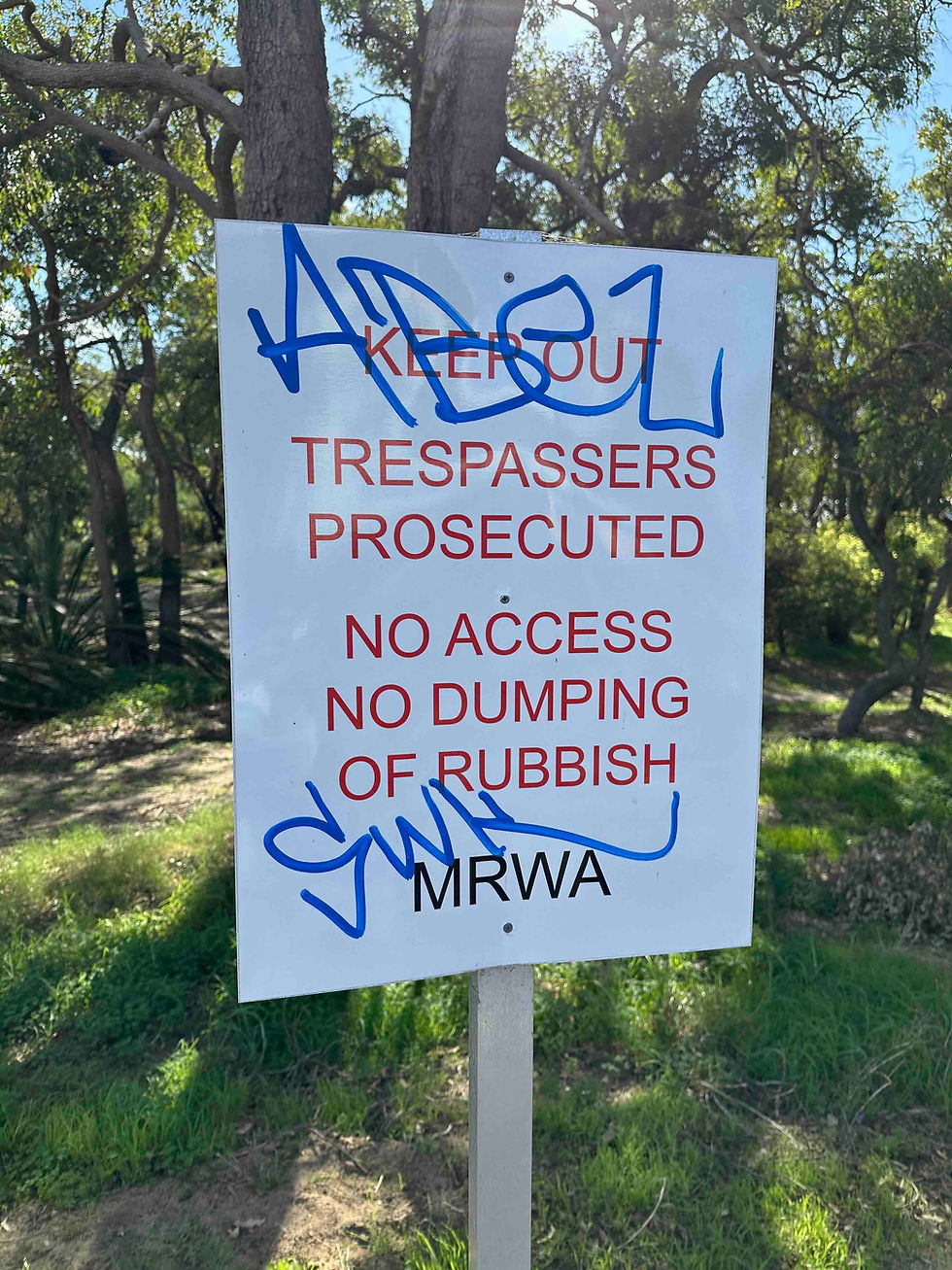
The bushland between Empire Avenue and Pearson Street has effectively remained in planning limbo for decades due to the historical Stephenson Highway reservation dating back to the 1950s.
Today, the area presents an unusual contradiction.
Although signage around the site states “Keep Out – Trespassers Prosecuted” and “No Access – No Dumping of Rubbish,” the bushland is openly accessible from multiple locations. Existing fencing is incomplete, deteriorated, or ineffective, and well-worn tracks throughout the site clearly indicate regular public use.
The result is a bushland area that is technically restricted, but functionally open.
2. Clear Signs of Public Use

The walk-through identified extensive evidence of ongoing public activity within the bushland, including:
informal walking trails,
bike riding activity,
constructed dirt ramps and track features,
rope swings,
makeshift cubby-style structures,
and multiple unofficial access points.
There is also clear physical access from Newman College into the bushland, including paths and steps connecting directly from the school grounds.

The site appears to be widely used by the community despite there being no formal management framework for public access.
3. Signs of Degradation and Lack of Management
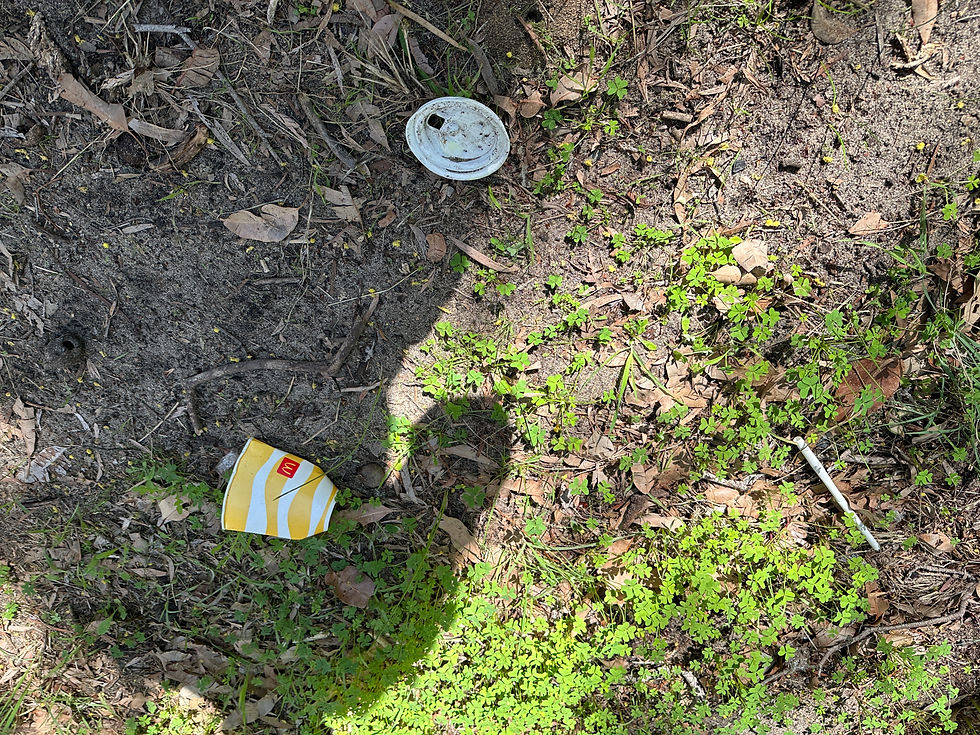
A number of issues were observed throughout the bushland, including:
noticeable litter and rubbish,
informal track formation,
sparse ground cover in high-use areas,
disturbed vegetation,
deteriorating fencing,
piles of branches and debris,
and overgrown vegetation encroaching onto footpaths along Empire Avenue.
Numerous tree stumps were also identified across the site, indicating past tree removal activity. Some appeared relatively recent, although the reasons for removal are unclear.
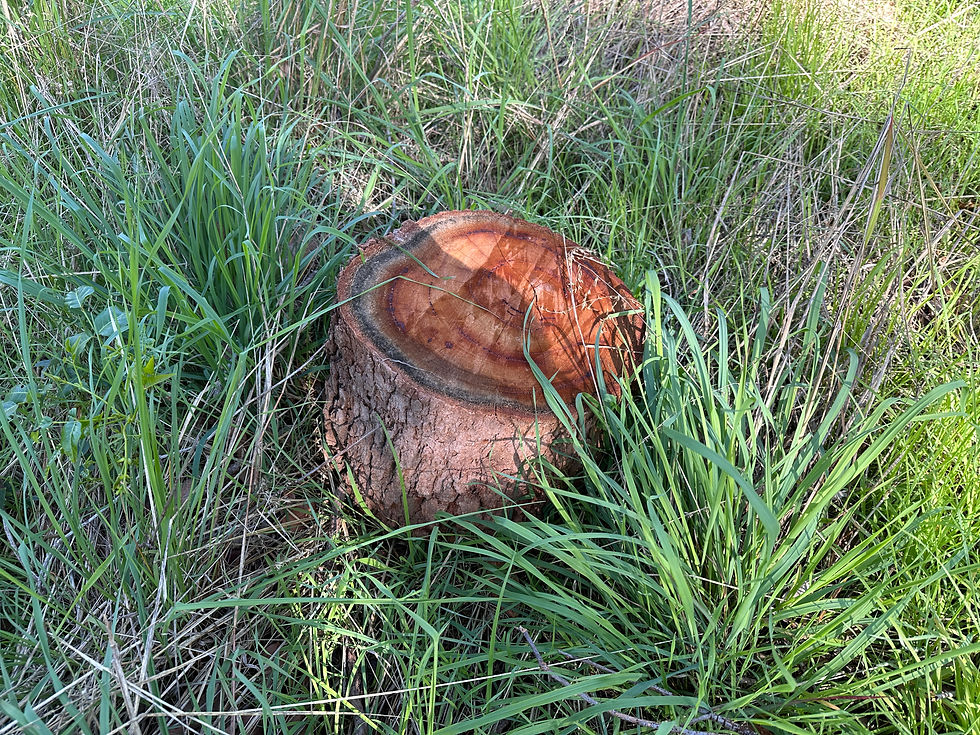
Altogether, several parts of the bushland currently present as unmanaged and lacking clear environmental stewardship.
4. Environmental Value of Churchlands Bushland Remains Significant

Importantly, not all of the bushland is degraded.
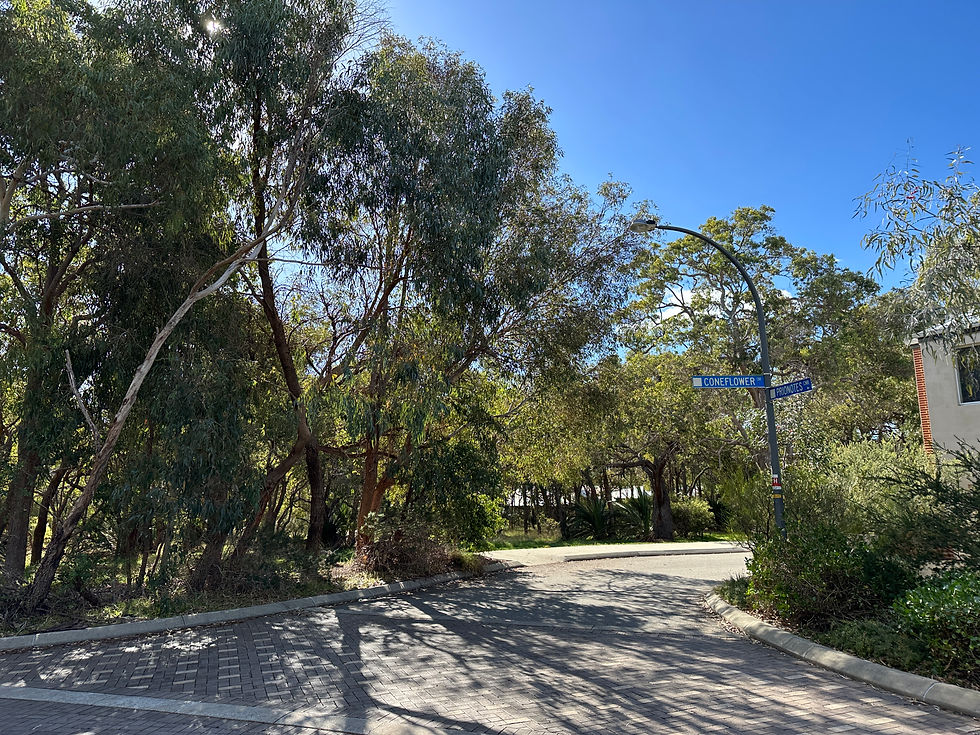
Large sections remain relatively intact, with dense native vegetation, mature trees, and important environmental value within an increasingly urbanised part of Perth.
The bushland contributes to:
local tree canopy,
urban cooling,
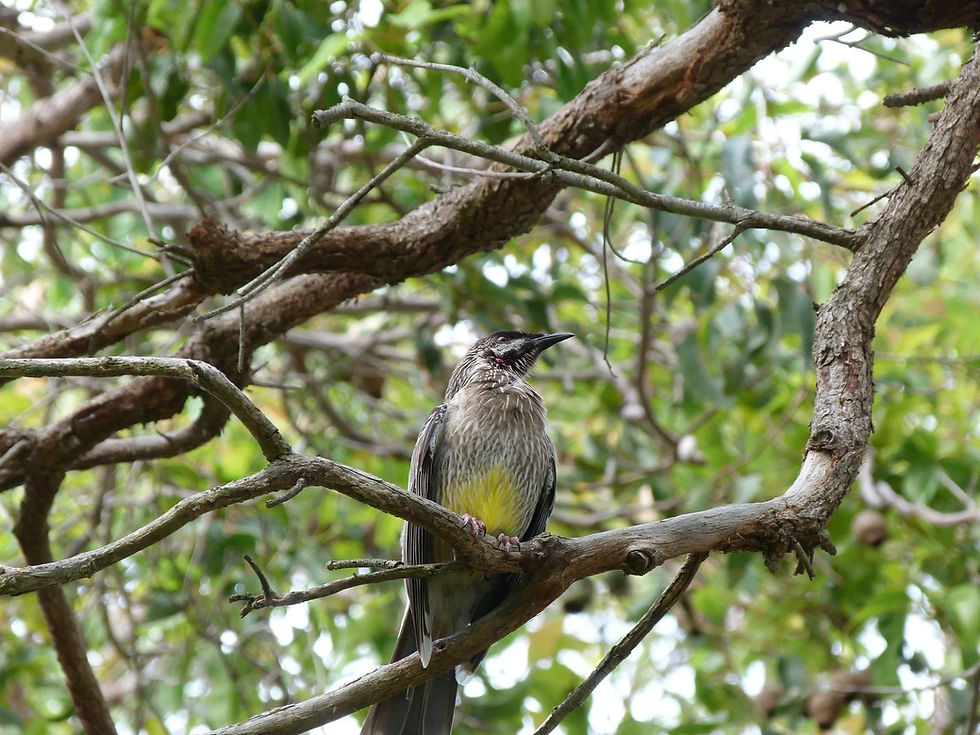
biodiversity,
wildlife habitat,
and ecological connectivity between surrounding green spaces including Herdsman Lake.
The site also provides community value through passive recreation, nature appreciation, and access to natural landscapes within the suburban environment.
Opportunity for Restoration and Protection
Despite the current condition of some areas, the bushland also represents a significant opportunity.
With appropriate management, the site could potentially be restored and protected while still allowing controlled community access.
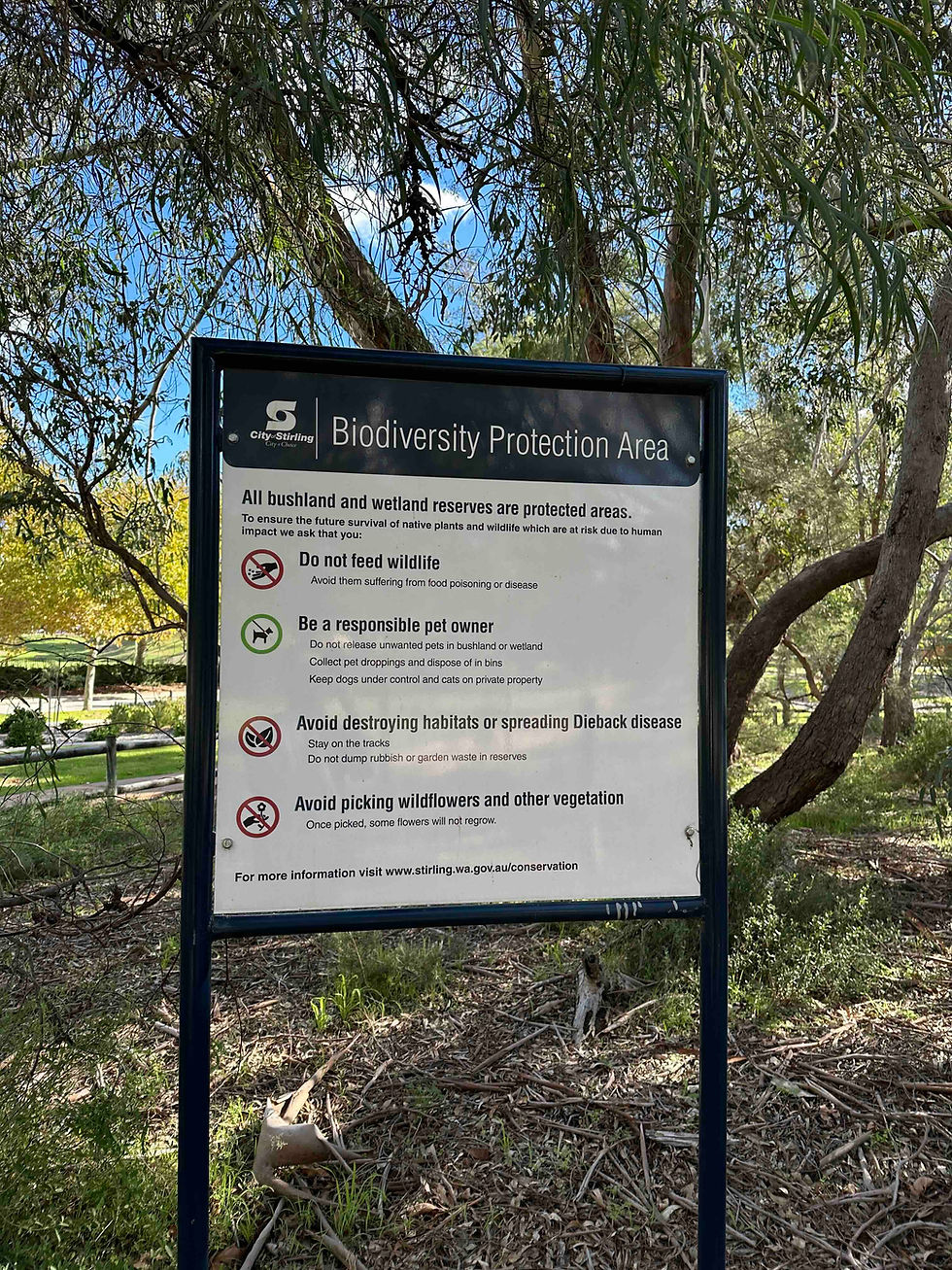
A strong local example already exists nearby in Abbeybrook Reserve, where the City of Stirling has successfully implemented:
defined fencing,
designated limestone pathways,
environmental signage,
vegetation protection measures,
and ongoing maintenance.
Abbeybrook Reserve demonstrates that environmental protection and community access are not mutually exclusive. With proper planning and management, both can coexist successfully.
The Need for Long-Term Clarity
Regardless of differing views regarding the proposed connector road, there appears to be growing agreement within the community that the current uncertainty surrounding the bushland cannot continue indefinitely.
At present, the site exists in a state of ambiguity:
signed as restricted,
widely accessed by the public,
environmentally valuable,
but lacking clear long-term direction or active management.
Without intervention, there is a risk that the bushland will continue to gradually deteriorate through unmanaged access and ongoing disturbance.
However, with clear direction and appropriate stewardship, there is also a strong opportunity to preserve, rehabilitate, and enhance this important natural area for future generations.
A copy of the full environmental condition report has been provided to Main Roads WA.


Comments